
Linen-cotton, linen-viscose or linen-lyocell? Choosing a blend
Pure linen is cool, strong and beautifully textured. It also creases easily and can feel stiff at first. Blends keep much of its character while changing the parts you want to change.
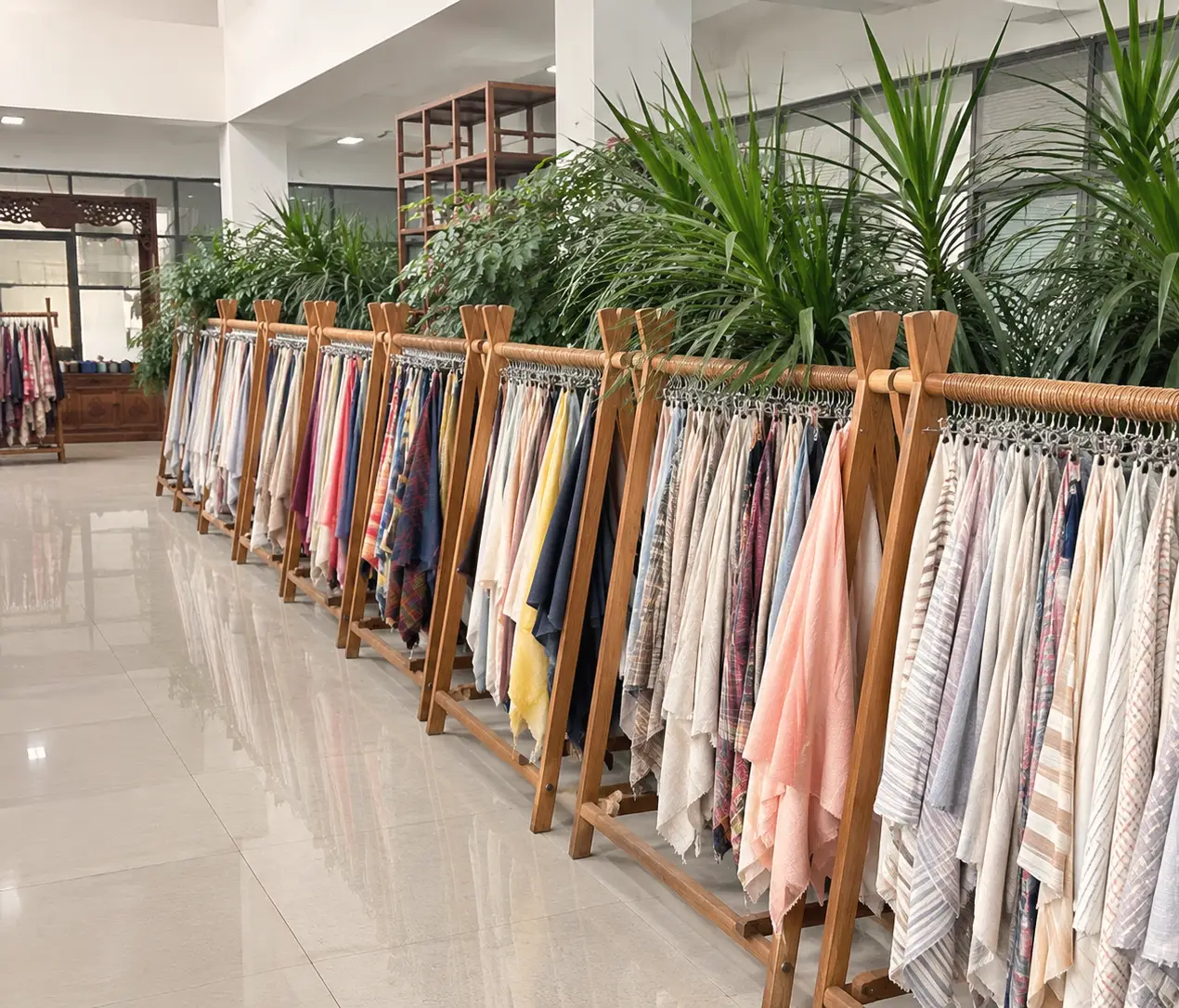
Pure linen
Linen is strong, breathes well and softens with every wash. Its slubby texture and natural lustre are hard to imitate. The trade-offs are creasing, a crisp hand when new, and a higher price than most cotton.
Linen-cotton
Cotton makes the fabric softer and smoother, creases a little less and usually lowers the cost. You keep a linen look, especially when linen is in the weft or the blend is above half linen. It is a good choice for shirts, dresses and everyday trousers.
Linen-viscose
Viscose adds drape and a gentle sheen. The fabric falls more fluidly and feels cooler and softer on the skin, which suits dresses, blouses and wide trousers. Viscose is weaker when wet, so gentle washing and the right finish matter.
Linen-lyocell
Lyocell gives a smooth hand and a soft, heavy drape, with good strength. It is often chosen for elevated womenswear and relaxed tailoring. When the cellulose comes from certified sources, it can support a sustainability story alongside European flax.
Stretch linen
A small share of elastic yarn adds comfort and shape recovery for fitted trousers and jackets. Ask about recovery and shrinkage, because stretch fabrics behave differently in washing.
How to choose
- Want the most natural look and feel: pure linen.
- Want softer, easier everyday pieces at a lower price: linen-cotton.
- Want drape and movement: linen-viscose or linen-lyocell.
- Want fit and comfort in trousers or jackets: stretch linen.
Composition for each of our fabrics is listed on its page once confirmed. If you need a blend that is not shown, ask us: we can develop one to your brief.


