
Yarn-dyed vs piece-dyed linen: what buyers should know
Most linen is either dyed as yarn before weaving, or dyed as cloth after it. The choice shapes the colour, the pattern and the price.
Two ways to add colour
Piece-dyed fabric is woven from undyed yarn, then the whole length of cloth is dyed one colour. It is the usual route for solid colours, and it lets a mill keep greige fabric in stock and dye to order.
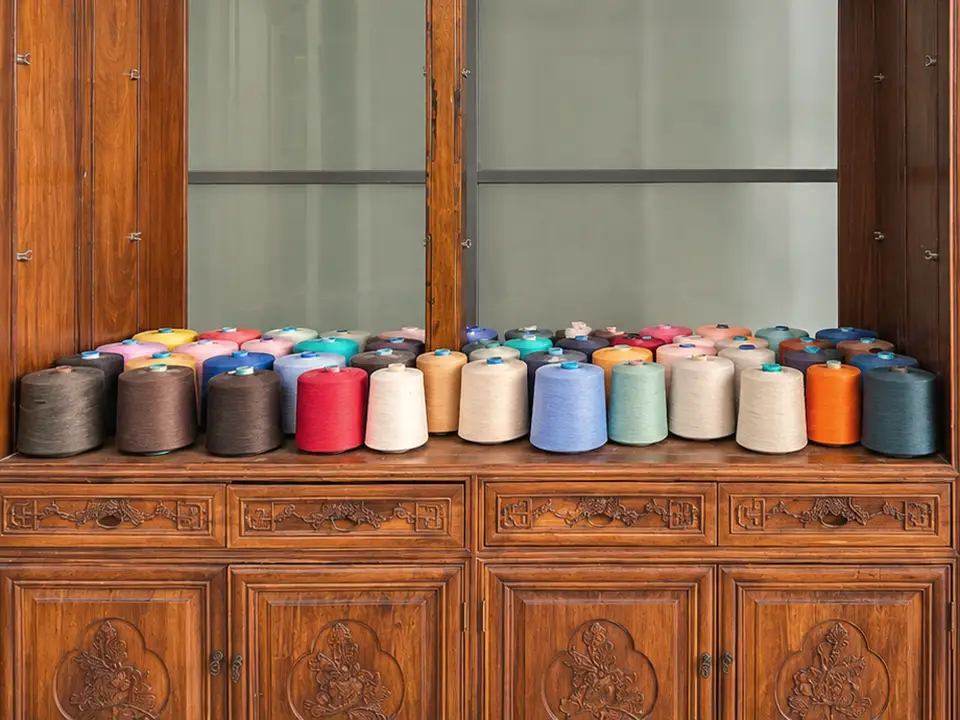
Yarn-dyed fabric is woven from yarn that has already been dyed. Each colour in the pattern is a separate yarn, placed in the warp and weft in a set order. Stripes, checks and many woven motifs can only be made this way.
How the colour looks
Because each yarn carries its own colour, yarn-dyed linen has depth. You see the slight variation between fibres, and where colours cross, they mix optically instead of sitting flat on the surface. Chambray, with a coloured warp and a white weft, is a simple example.
Piece-dyed linen looks more even. That suits clean, modern solids, and it is often the better choice when you need an exact match across a range.
Colourfastness
In yarn dyeing the dye reaches the core of the yarn, so colour tends to hold up well to washing and wear. The dye class matters as much as the method. Our yarns are vat-dyed, a method known for strong fastness to washing and light, which is why it is used for shirting and workwear.
Cost, minimums and lead time
Yarn-dyed fabric needs more planning. Yarns are dyed before weaving and every colour has to be ready before the warp can be set up. That is why yarn-dyed designs usually have higher minimums and longer lead times than piece-dyed solids.
For yarn-dyed fabrics, our minimum is 200 m, and hand-woven samples of a new design usually take 3–4 days, so you can check the colours before committing to bulk.
Which should you choose?
- Stripes, checks or woven patterns: yarn-dyed.
- A solid with a natural, slightly mottled look: yarn-dyed or a melange.
- A flat, even solid in many colours: piece-dyed is usually simpler.


