

Linen fabric weight guide: g/m², oz/yd² and what each weight is for
Weight is the first number most buyers ask for, and the one most often misread. Here is what it measures, how to convert it, and how it relates to what you want to make.
What fabric weight measures
Fabric weight is the mass of one square metre of cloth, written as g/m² or gsm. In the United States it is often given in ounces per square yard (oz/yd²). Some suppliers quote weight per linear metre instead, which depends on the width, so always check which one you are reading.
To convert, multiply g/m² by 0.0295 to get oz/yd². A 150 g/m² linen is about 4.4 oz/yd²; 200 g/m² is about 5.9 oz/yd².
A rough guide by end use
These ranges are a starting point, not rules. Yarn count, density and finish all change how a fabric feels at the same weight.
- Under 130 g/m²: light and airy. Shirts, blouses, summer dresses, scarves.
- 130 to 180 g/m²: the everyday middle. Shirts, dresses, skirts and light trousers.
- 180 to 250 g/m²: more body. Trousers, overshirts, unlined jackets and workwear-style pieces.
- Over 250 g/m²: structured and heavy. Jackets, coats, bags and home textiles.
Weight before and after finishing
Linen often gets heavier after washing, because the fabric shrinks and the yarns close up. A fabric that weighs 150 g/m² on the loom can be noticeably heavier once washed and dried. When you compare offers, ask for the finished weight, and the shrinkage that goes with it.
Weight is not the whole story
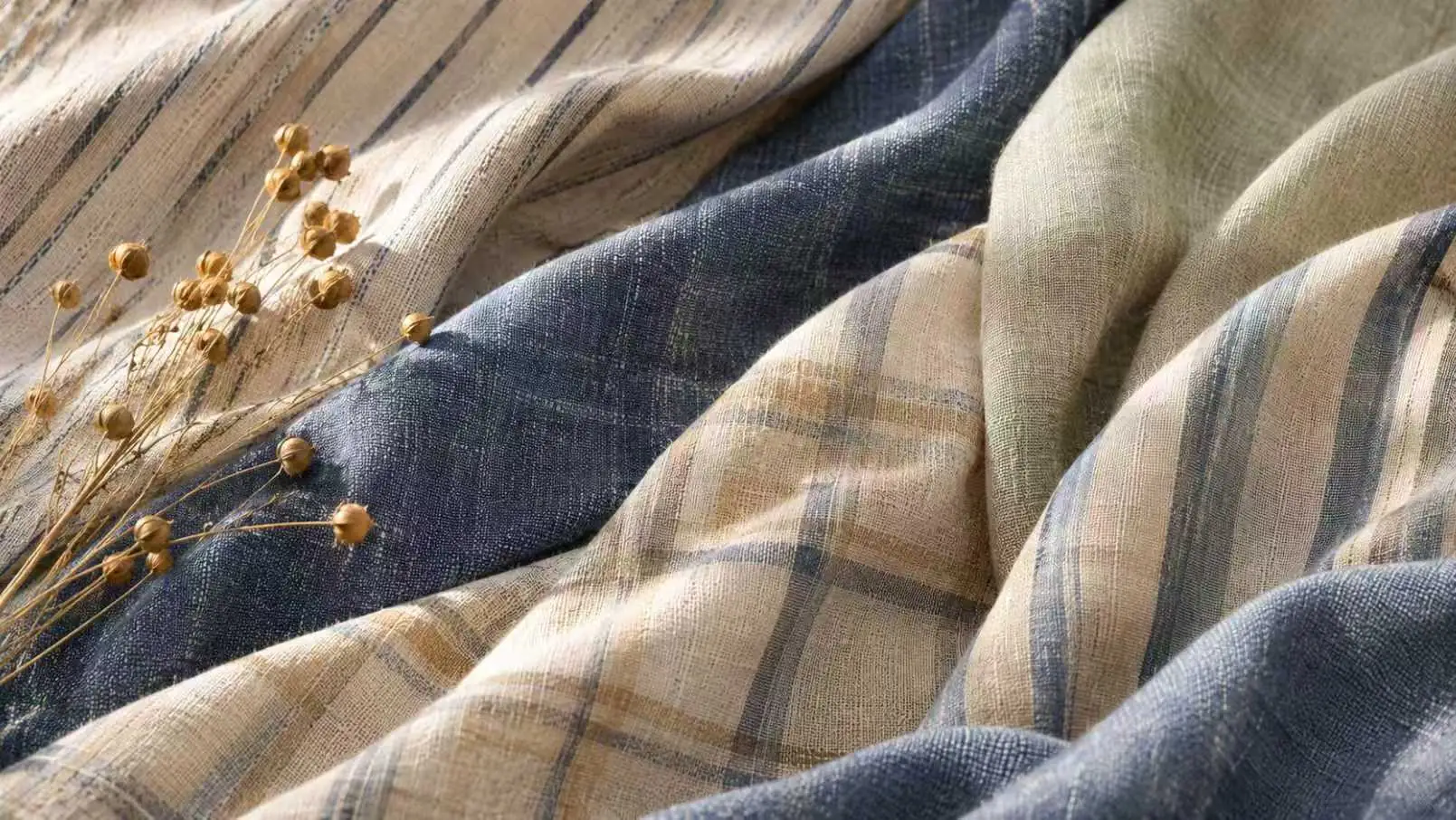
Two fabrics with the same weight can feel completely different. A fine yarn woven densely feels smooth and crisp; a thicker yarn woven openly feels rustic and breathable. Yarn-dyed stripes and checks add another layer, because the colour pattern is set by how the yarns are arranged.
The best way to judge is a swatch. If you are developing a new fabric, tell us the end use and a target weight, and we will suggest a construction to match.


